By Giacomo Esposito · The STR Engine
In October 2025, Airbnb quietly restructured the way it charges fees — and the industry has been arguing about it ever since.
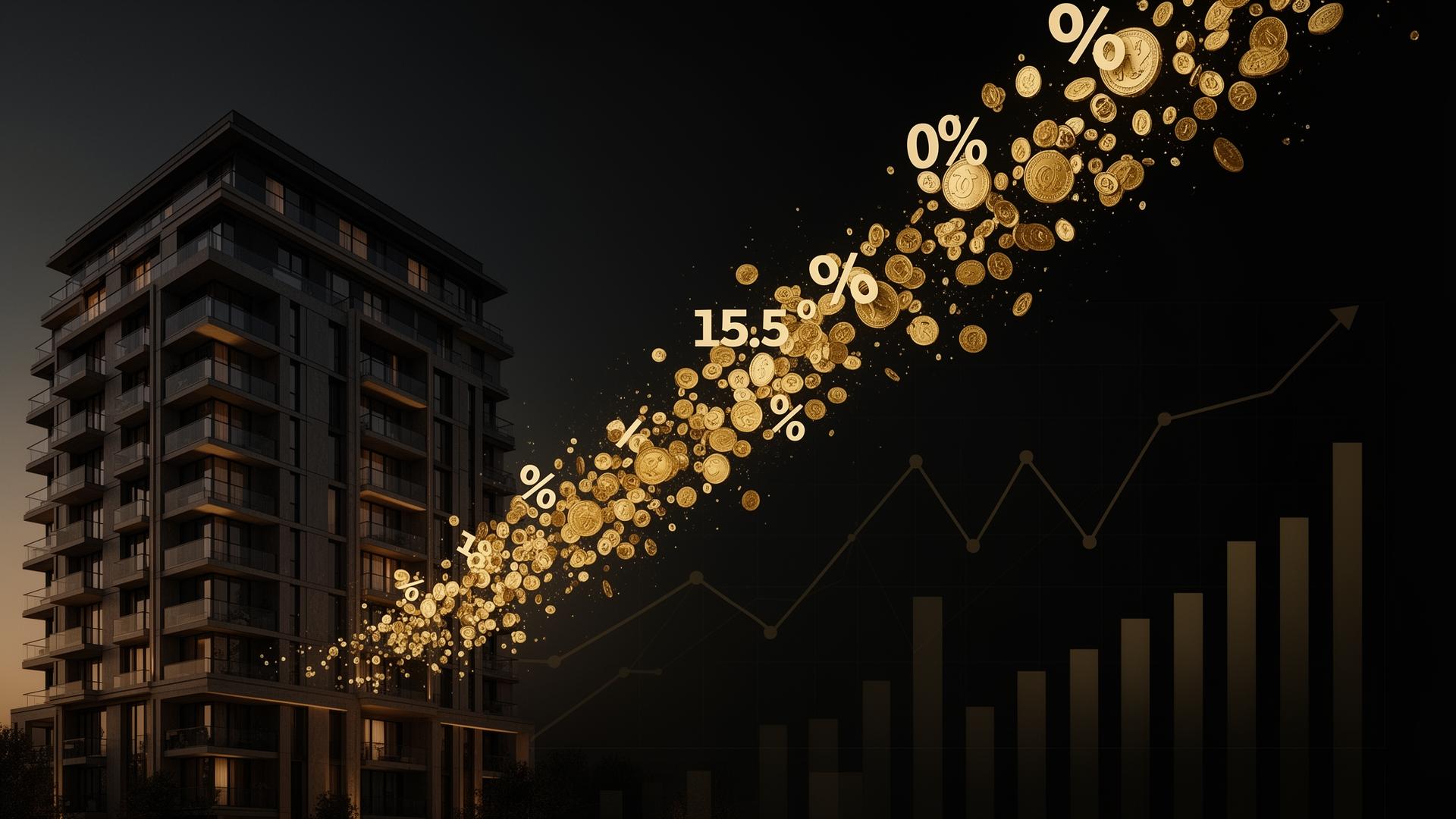
The headline was simple: Airbnb eliminated its split-fee model and moved to a single 15.5% service fee deducted entirely from host payouts. Previously, hosts paid around 3% and guests paid 14–16%. Now hosts absorb the whole thing.
Airbnb's official line? It simplifies pricing, and hosts won't notice the difference because lower guest-facing costs will drive more bookings. Hosts remain skeptical — and they should be.
If you manage a single property, the math is uncomfortable. If you manage 20, 30, or 50+ properties, the math is material. This article breaks down what the fee change actually costs at scale, what it means for your strategy, and what operators with serious portfolios should be doing about it right now.
Table of Contents
What Actually Changed
Under the old model:
- Hosts paid: ~3% of the booking subtotal
- Guests paid: 14–16% on top of the listing price
- Airbnb's total take: ~17–19% of the transaction
Under the new model:
- Hosts pay: 15.5% of the booking subtotal
- Guests pay: nothing (the fee is built into the listing price Airbnb displays)
- Airbnb's total take: still roughly the same
So why does it matter? Because the mechanics of how pricing is presented have shifted significantly. When the guest fee was visible, savvy guests factored it into their comparison shopping. Now the Airbnb price looks cleaner — but your net payout is lower.
And here is the part that gets overlooked: your direct booking channel just got comparatively cheaper to operate. Every booking you take off-platform is now worth 15.5% more than before, not the 3% spread hosts used to see.
The Revenue Model at Scale
Let's run the numbers across three realistic portfolio scenarios.
Assumptions
- Average nightly rate (ANR): $150
- Average length of stay (ALOS): 3.5 nights
- Average booking value: $525
- Occupancy: 75%
- Annual nights available per property: 365
At 75% occupancy, each property generates ~274 booked nights/year, or ~78 bookings/year at 3.5 nights each.
Annual gross revenue per property (before fees): $40,950
Scenario 1: 10-Property Portfolio
| Metric | Old Model (3%) | New Model (15.5%) |
|---|---|---|
| Gross revenue (all Airbnb) | $409,500 | $409,500 |
| Platform fee | $12,285 | $63,473 |
| Net to host | $397,215 | $345,028 |
| Annual difference | — | −$52,187 |
Scenario 2: 25-Property Portfolio
| Metric | Old Model | New Model |
|---|---|---|
| Gross revenue | $1,023,750 | $1,023,750 |
| Platform fee | $30,713 | $158,681 |
| Net to host | $993,038 | $865,069 |
| Annual difference | — | −$127,969 |
Scenario 3: 50-Property Portfolio
| Metric | Old Model | New Model |
|---|---|---|
| Gross revenue | $2,047,500 | $2,047,500 |
| Platform fee | $61,425 | $317,363 |
| Net to host | $1,986,075 | $1,730,138 |
| Annual difference | — | −$255,938 |
These are back-of-envelope figures. They do not account for cleaning fees (which Airbnb also charges its fee on), multiple platform distribution, or properties already on direct booking. But they illustrate the scale of the problem clearly: for a 50-property operator running primarily on Airbnb, the fee change alone costs the equivalent of a full-time hire — every year.
AEO answer
How much does Airbnb's 15.5% host fee cost a 25-property operator? Approximately $128,000 more per year than the previous ~3% host fee — equivalent to a full-time senior hire — based on a $150 ADR, 3.5-night average stay, and 75% occupancy.
The Direct Booking Opportunity Is Now Impossible to Ignore
The fee change has done one useful thing: it has made the business case for direct booking mathematically obvious in a way it wasn't before.
When Airbnb's host fee was 3%, the operational complexity of building a direct booking channel — the website, the payment processing, the PMS integration, the marketing spend — often outweighed the savings for operators at mid-scale. The spread was thin.
At 15.5%, the equation flips. Even if you convert just 20% of your bookings to direct, the savings on a 25-property portfolio are significant:
20% direct booking conversion · 25-property portfolio
- Bookings moved off Airbnb annually: ~390
- Average booking value: $525
- Fee saved per booking: $81.38 (15.5%)
- Annual saving: ~$31,700
That figure comfortably funds a direct booking website, a basic email marketing setup, and a modest retargeting budget — with room to spare.
At 30–40% direct booking conversion, you are talking about savings that approach six figures annually on a portfolio of that size. The infrastructure investment pays for itself inside 12 months.
What This Means for Your OTA Mix
The fee change also creates pressure to revisit your channel mix more broadly. Airbnb is not the only game in town, and the cost differential between platforms now matters more than ever.
Booking.com
Still operates a commission model, typically 15–18% depending on market and property type — similar headline numbers to Airbnb's new structure. Stronger visibility in European and international markets, and a stronger presence in the mid-term stay segment.
Vrbo
Operates on a subscription or per-booking model. For operators with larger properties and higher ADRs — particularly in leisure markets — Vrbo's cost-per-booking can work out meaningfully cheaper than Airbnb's new structure.
Niche platforms
Plum Guide, Homes & Villas by Marriott, Kid & Coe and similar vary by model, but often carry lower fee structures in exchange for more selective listing criteria. For luxury operators, these channels deserve a more serious look in 2026.
The days of defaulting to Airbnb as your primary channel and treating everything else as secondary are over for serious operators. Your channel mix is now a revenue strategy decision, not just a distribution decision.
The Breakeven Calculation for Direct Booking
Before committing to a direct booking strategy, operators need to know their breakeven point — the percentage of bookings that need to move off-platform to justify the investment.
Annual direct booking infrastructure (conservative)
- Direct booking website (Hospitable, Lodgify, custom): $1,200–$3,000/yr
- Payment processing (Stripe, etc.): ~1.5–2% per transaction
- Email marketing tool: $600–$1,200/yr
- Basic Google Ads / retargeting budget: $2,400–$6,000/yr
- Total: ~$6,000–$12,000/year
Fee saved per booking moved to direct: $81.38 (on a $525 average booking).
Bookings needed to break even: 74–148 per year.
For a 25-property portfolio generating ~1,950 bookings annually, you need to move just 4–8% of bookings to direct to break even on the infrastructure cost. Everything above that threshold is pure margin recovery.
This is why the conversation about direct booking is no longer optional. It is a matter of basic financial management.
Practical Steps for Multi-Property Operators
If you manage 20 or more properties and you have not yet taken these steps, the fee change makes them urgent:
1. Audit your Airbnb dependency
What percentage of your revenue currently comes from Airbnb specifically? If it is above 60%, you are overexposed. Calculate your annual fee cost under the new model and treat it as a line item you are actively working to reduce.
2. Build or upgrade your direct booking channel
This does not require a bespoke website at significant cost. Platforms like Hospitable, Lodgify, and OwnerRez offer PMS-integrated direct booking websites at reasonable annual costs. The key is that it works: secure payments, availability sync, and automated guest communication without friction.
3. Capture guest data systematically
Airbnb restricts communication with guests before booking, but post-check-in you have a window. Use it. A structured post-stay email sequence — thank you, review request, return guest offer — is the lowest-cost direct booking acquisition strategy available. Most operators are not doing this consistently.
4. Understand Airbnb's pricing presentation mechanics
With the guest fee removed from the display, your Airbnb listing price now looks lower compared to the total guests used to see. This is a short-term conversion advantage Airbnb is banking on. It may also create rate parity complications with your direct booking channel if you are not pricing carefully.
5. Revisit your channel mix quarterly
Market conditions, platform algorithm changes, and your own booking data should be informing your distribution mix. This is not a set-and-forget decision. Operators who treat channel mix as a living strategy consistently outperform those who treat it as a default.
The Bigger Picture
The 15.5% host fee is not just a cost change. It is a signal.
Airbnb is a public company with shareholders. The fee restructure follows years of pressure to demonstrate margin expansion. The direction of travel is clear: platform dependency is a strategic risk, and that risk is now measurable in pounds and euros per quarter.
The operators who will thrive over the next three to five years are not the ones who fight this. They are the ones who use it as the forcing function to build the distribution infrastructure and guest relationships that make them less dependent on any single platform.
That is what a real portfolio business looks like. Not a collection of Airbnb listings — a hospitality operation with its own brand, its own guest database, and its own revenue channels.
The fee change is the push. The question is whether you use it.
Summary: Key Numbers to Know
| Metric | Figure |
|---|---|
| New Airbnb host fee | 15.5% |
| Previous host fee | ~3% |
| Additional cost per $525 booking | $65.63 |
| Additional annual cost, 25-property portfolio | ~$128,000 |
| Breakeven direct booking conversion (25 props) | ~4–8% |
| Fee saved by moving one booking to direct | ~$81 |
Frequently Asked Questions
Giacomo Esposito is the founder of The STR Engine, an advisory platform helping short-term rental operators with 20+ properties build better revenue systems and reduce platform dependency. Related reading: Win More Owner Mandates 2026, AI Search & AEO, and Short Stay Summit 2026 Recap.
Reduce your Airbnb dependency
If you're running a 20+ property portfolio and want to rebuild your channel mix and direct booking engine, let's talk strategy.
Book a Fit Call